

Most of us will have reacted with some surprise to the news that healthy life expectancy has fallen in both the UK and the US. The UK now ranks 20th out of 21 comparable wealthy nations, with only the US ranking lower. That should give every employer pause. (Health Foundation, 2026)
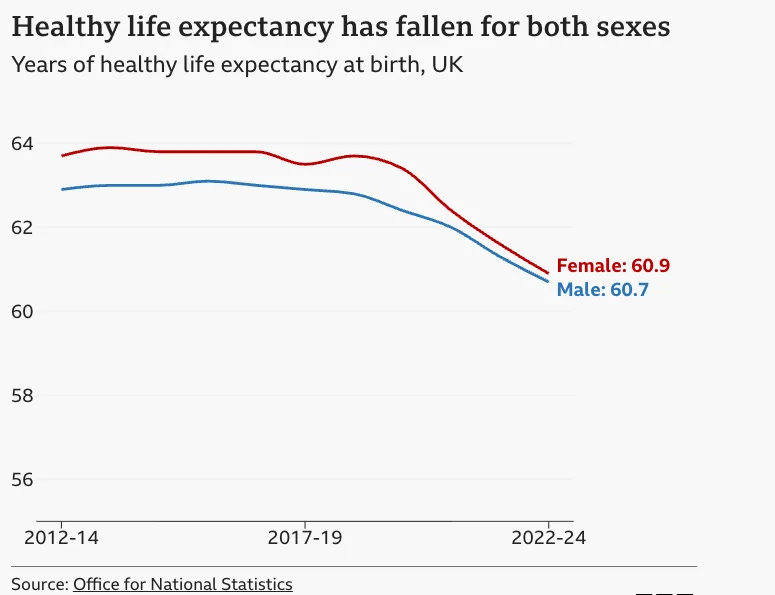
The cause is not what many assume. It is not cancer rates or cardiovascular disease. It is self-reported mental ill health among young people. Between 2012 and 2022, the proportion of 16 to 34 year olds reporting a mental health condition more than tripled, from 3.8% to 13.3%. (The Spectator / ONS, 2026) That is an extraordinary shift in a single decade.
One of the things that drives human progress is the expectation that the next generation will be healthier than our own. When the data moves in the opposite direction, it matters. And for employers, it matters in ways that go well beyond the moral case.
This is Already Showing Up at Work
UK workers took an average of 9.4 days off sick in 2024, up from 5.8 days in 2022. (CIPD Health and Wellbeing at Work, 2025) That is the highest figure the CIPD has recorded in over 15 years, and mental ill health is the leading cause of both short and long-term absence. Poor mental health costs UK employers around £51 billion a year. (Deloitte, 2024) The number of 16 to 34 year olds economically inactive due to long-term mental ill health has risen by 76% since 2019. (Keep Britain Working Review, 2025)
The workforce arriving over the next decade has grown up in the period that produced these numbers. That’s something we are all going to have to face.
What Should Employers Do?
Three things matter most:
- Prevention. The most effective and cost-efficient approach to employee wellbeing is to intervene before problems escalate. Deloitte’s analysis of 26 studies found that employers receive an average return of £4.70 for every £1 invested in workplace mental health initiatives, with proactive, prevention-focused programmes generating even higher returns than reactive support.
- Skilled Managers. Skilled, empathetic managers who can spot early warning signs and have honest conversations are the most effective human intervention available. The evidence is clear: where organisations invest in manager training for mental health, over 60% of managers feel confident identifying problems and over 70% feel confident having the difficult conversations that follow. Where they do not train managers, fewer than half do. (CIPD, 2025)
- People Strategy. Boards that still treat people strategy as a HR matter only rather than a one that impacts the P&L are going to find that position increasingly hard to defend. Higher sickness absence means more days lost, lower productivity, and higher costs. The CFO and CEO need to be engaged in this, not just the HR director / CPO. The business case for investing in preventative health interventions for employees is strengthening as absence levels rise, not weakening.
The data tells us what is coming. The question for employers in the UK and USA is whether they get ahead of it.
Champion Life and Champion Life gives organisations the tools to understand and improve the health of their workforce. Find out more at:
Frequently Asked Questions
What does falling healthy life expectancy tell employers about workforce health?
Falling healthy life expectancy means people can expect to spend fewer years in good health. For employers, the population trend gives you a reason to check where health problems are affecting people’s ability to work. Compare sickness absence with anonymised staff feedback to see where problems are emerging before they show up in absence records.
How should employers respond to rising mental ill health among young people?
Build mental health support into onboarding and the first few months in a role. New starters may be unsure how to raise concerns about workload or who to speak to if they need confidential support. Use early check-ins to clarify priorities, explain how to ask for help and find out what is making the job harder than expected.
How can employers identify what’s driving mental health-related sickness absence?
Look at where mental health-related sickness absence is concentrated and what has changed in those teams. Review absence spells and days lost alongside changes in staffing, shift patterns or workload. If absence rises after a rota change, ask staff how the new pattern affects breaks and recovery time before deciding what to change.
How can HR build a business case for workplace mental health investment?
Build the case around the cost of the problem you plan to address and the cost of the proposed intervention. Use your own figures for days lost, overtime and temporary cover to estimate the potential savings. Agree with finance what improvement would justify continuing the programme and when you will review the results.
How can HR identify workforce health risks before sickness absence rises?
Combine absence records with anonymised employee feedback to see where health risks are building. Champion Life’s 90-Day Workforce Health Risk Assessment maps mental health and musculoskeletal (MSK) risk, with aggregated, anonymised reporting by group. Use the findings to decide where to investigate working conditions and target support.